Introduction
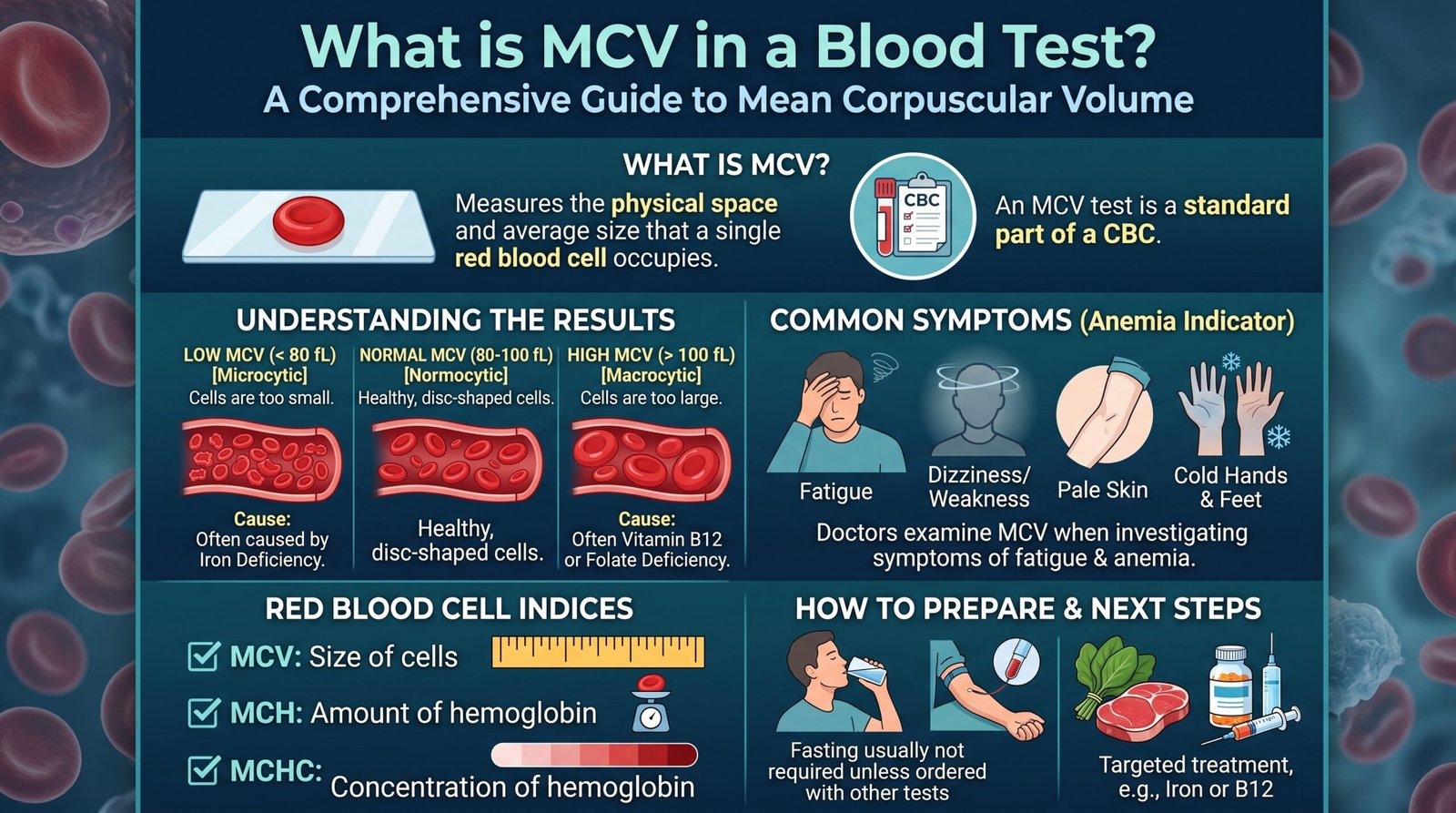
What is m c v in blood test mean Corpuscular Volume, commonly known as MCV, is a specific measurement taken during a standard blood test to evaluate the average size and volume of your red blood cells. Red blood cells are responsible for carrying oxygen from your lungs to every tissue and organ in your body. When you receive the results of a Complete Blood Count (CBC) panel, the MCV value provides critical information to your healthcare provider about your overall health and helps diagnose various types of blood disorders, most notably different forms of anemia.
Expert Insight: Hematologists and primary care physicians review complete blood counts (CBCs) daily. The MCV is often the very first diagnostic number examined when a patient complains of unexplained fatigue. It acts as a diagnostic compass, immediately pointing toward whether the body needs iron stores, vitamin B12, or if there is an underlying genetic trait affecting blood production.
Understanding what MCV in a blood test means can help you take charge of your health, interpret your laboratory results with greater confidence, and have more productive conversations with your doctor.
Understanding Mean Corpuscular Volume (MCV)
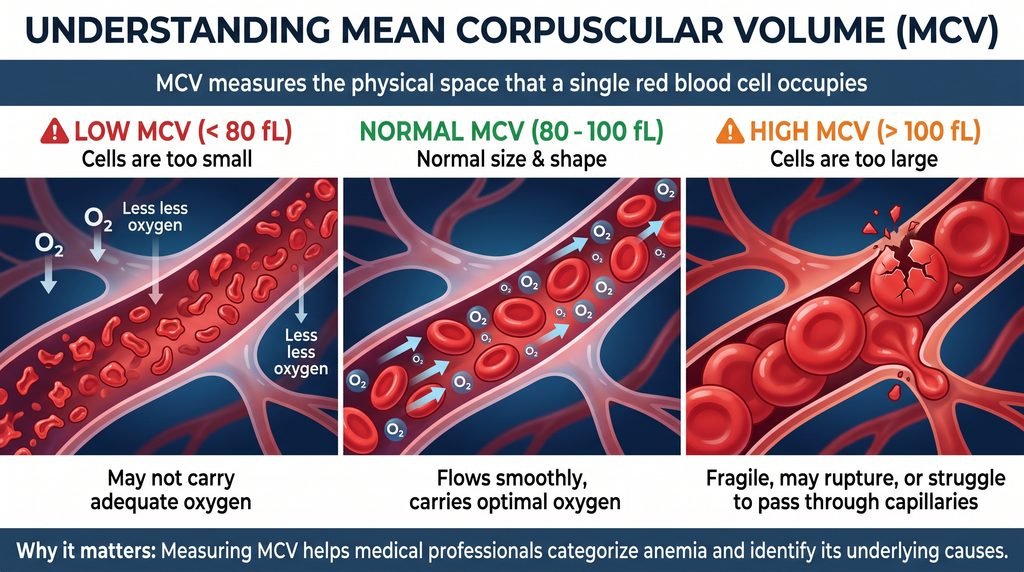
To grasp the MCV blood test meaning, it helps to understand the role of red blood cells. Normal red blood cells have a specific disc-like shape and size that allows them to flow smoothly through both large arteries and microscopic capillaries. The MCV measurement calculates the physical space that a single red blood cell occupies.
If your red blood cells are too small, they may not be able to carry an adequate amount of oxygen. If they are too large, they can become fragile, rupture easily, or struggle to pass through the smallest blood vessels. By measuring the mean corpuscular volume, medical professionals can categorize anemia and narrow down the underlying causes of your symptoms.
Why Do Doctors Order an MCV Blood Test?
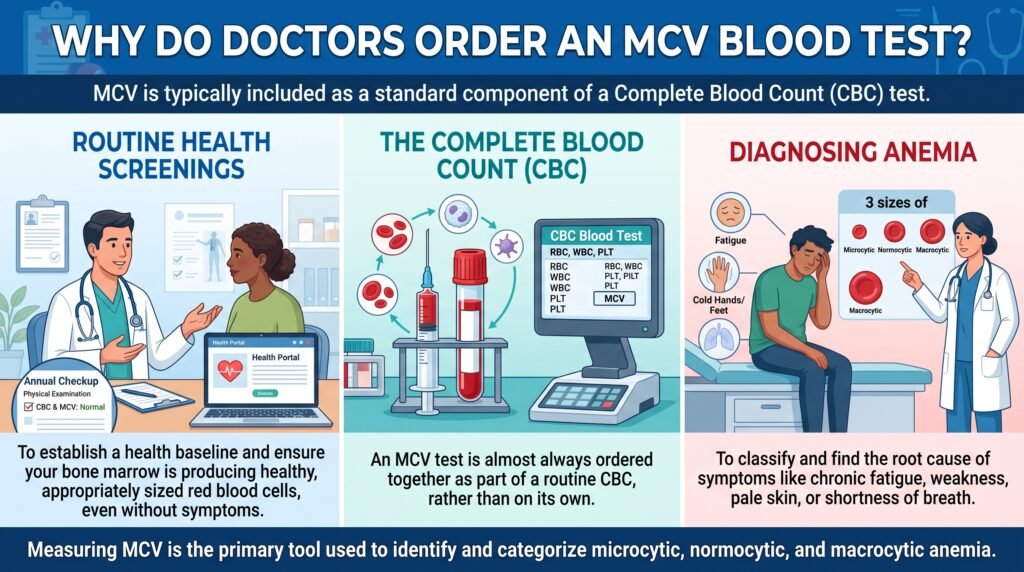
Physicians do not typically order an MCV test by itself. It is almost always included as a standard component of a Complete Blood Count (CBC). A doctor may request this test for several distinct reasons.
Routine Health Screenings
During an annual physical examination, a CBC is routinely ordered to establish a baseline of your general health. The MCV result helps ensure that your bone marrow is producing healthy, appropriately sized red blood cells even if you are not currently experiencing any symptoms of illness.
Diagnosing Different Types of Anemia
If you present with symptoms such as chronic fatigue, weakness, pale skin, cold hands and feet, or shortness of breath, your doctor will likely suspect anemia. Because anemia is not a single disease but rather a condition with many different root causes, the MCV level is the primary tool used to classify the type of anemia you might have. It categorizes the condition into microcytic (small cells), normocytic (normal cells), or macrocytic (large cells) anemia.
How to Prepare for an MCV Blood Test
Because the MCV measurement is part of a standard Complete Blood Count, preparation is generally minimal. In most cases, you do not need to fast before the blood draw. However, if your doctor has ordered a CBC alongside other tests—such as a fasting lipid panel or a fasting blood glucose test—you will be instructed to avoid eating or drinking anything except water for eight to twelve hours prior to the appointment. It is always best to clarify these instructions with your healthcare provider or the laboratory facility beforehand.
Normal MCV Levels: What You Need to Know
When reviewing your blood work, you will see a reference range provided by the specific laboratory that processed your sample. While slight variations exist between different labs, the generally accepted normal MCV range for a healthy adult is between 80 and 100 femtoliters (fL). A femtoliter is a microscopic unit of volume used specifically to measure cellular structures.
MCV Reference Ranges by Age and Condition
While 80 to 100 fL is the standard adult range, it is crucial to note that “normal” can fluctuate based on your stage of life:
- Newborns: 95 to 121 fL (Naturally higher baseline)
- Children (1-18 years): 70 to 86 fL (Gradually increases with age)
- Pregnant Women: Often experience a slight, natural increase in MCV due to increased red blood cell production and maternal fluid volume changes.
- Older Adults: MCV can naturally skew slightly higher as bone marrow ages, though significant elevations still require investigation.
If your MCV falls within this 80 to 100 fL range, it indicates that your red blood cells are of a normal, healthy size. If you have anemia but your MCV is normal, this is classified as normocytic anemia. This condition often results from sudden blood loss, kidney failure, or chronic inflammatory diseases.
Low MCV in Blood Test: Causes and Symptoms
An MCV value below 80 fL means your red blood cells are abnormally small. In medical terminology, this is referred to as microcytosis, and when accompanied by a low red blood cell count, it is known as microcytic anemia.
Common Causes of Microcytic Anemia
The most frequent cause of a low MCV is iron deficiency. Iron is a crucial building block of hemoglobin, the protein inside red blood cells that binds to oxygen. Without enough iron, the body cannot produce adequate hemoglobin, resulting in smaller, paler red blood cells. Iron deficiency can stem from a lack of iron-rich foods in your diet, poor absorption in the digestive tract, or chronic blood loss, such as heavy menstrual bleeding or gastrointestinal ulcers.
Another cause of low MCV is thalassemia, an inherited genetic disorder that affects the body’s ability to produce normal hemoglobin. Lead poisoning and chronic inflammation can also occasionally result in microcytic cells.
Symptoms of Low MCV
Individuals with low MCV and microcytic anemia often experience persistent exhaustion, dizziness, a rapid heartbeat, and unusual cravings to chew on non-food items like ice or dirt, a condition known as pica. Brittle nails and hair loss are also common physical indicators of prolonged iron deficiency.
High MCV in Blood Test: Causes and Symptoms
An MCV value above 100 fL indicates that your red blood cells are larger than normal. This condition is known as macrocytosis. When large red blood cells occur alongside a low overall blood count, the diagnosis is macrocytic anemia.
Common Causes of Macrocytic Anemia
The leading causes of a high MCV are deficiencies in vitamin B12 or folate (vitamin B9). These essential vitamins are required for normal DNA synthesis during the creation of red blood cells in the bone marrow. When these vitamins are lacking, the cells cannot divide properly, leading them to grow abnormally large before entering the bloodstream.
Other potential causes of an elevated MCV include chronic alcohol abuse, liver disease, hypothyroidism, and the use of certain medications, particularly chemotherapy drugs or antiretroviral therapies.
Symptoms of High MCV
Symptoms of macrocytic anemia mirror those of general anemia, including fatigue and paleness, but can also feature unique neurological complications if vitamin B12 deficiency is the root cause. These specific symptoms may include numbness or a tingling sensation in the hands and feet, memory problems, confusion, and a smooth, swollen, or red tongue.
What Does a ‘Borderline’ MCV Score Mean? (79 fL or 101 fL)
It is common for patients to worry when they see an MCV score of 79 fL or 101 fL flagged on their lab report. However, borderline results often do not indicate a severe underlying disease. Slight fluctuations can be caused by mild dehydration, standard laboratory margins of error, recent minor illnesses, or simply an individual’s natural baseline. Doctors always evaluate the broader context of a complete blood count before diagnosing a condition based on a borderline MCV score alone.
MCV vs. MCH vs. MCHC: Understanding Your Red Blood Cell Indices
When looking at lab results, MCV is almost always grouped with MCH and MCHC. Together, these are known as “red blood cell indices,” and doctors use them in tandem for an accurate diagnosis:
- MCV (Mean Corpuscular Volume): Measures the size of your red blood cells.
- MCH (Mean Corpuscular Hemoglobin): Measures the amount of hemoglobin in an average red blood cell.
- MCHC (Mean Corpuscular Hemoglobin Concentration): Measures the density or concentration of hemoglobin (evaluating how pale or deeply colored the cells are).
Reviewing all three gives medical professionals a comprehensive picture of red blood cell health rather than relying on a single metric.
Next Steps if Your MCV Levels Are Abnormal
Receiving an abnormal MCV result is not a diagnosis in itself, but rather a signpost directing your doctor toward the actual underlying issue.
Additional Blood Tests
If your MCV is low, your doctor will likely order an iron panel, including ferritin and total iron-binding capacity (TIBC), to confirm an iron deficiency. If your MCV is high, tests to measure your blood levels of vitamin B12 and folate will be the next logical step. A reticulocyte count might also be ordered to see how fast your bone marrow is producing new red blood cells.
Dietary and Lifestyle Adjustments
Treatment entirely depends on the underlying cause. Iron deficiency may be treated with over-the-counter iron supplements and a diet rich in red meat, leafy green vegetables, and fortified cereals. Vitamin B12 deficiency might require high-dose oral supplements or direct intramuscular injections, especially if the cause is an absorption issue like pernicious anemia. In all cases, addressing the specific nutritional gap or underlying medical condition will eventually return the mean corpuscular volume to its normal, healthy range.
Frequently Asked Questions (FAQs) About MCV Blood Tests
How long does it take for MCV levels to return to normal?
Red blood cells have a lifespan of approximately 120 days in the body. Once you begin treatment for a deficiency (such as iron or vitamin B12 supplementation), it typically takes 2 to 3 months for newly formed, healthy cells to replace the old ones and for your MCV value to stabilize in the normal range.
Are there medications that skew MCV results?
Yes. Certain medications can artificially raise your MCV levels. These include Metformin (often prescribed for diabetes), specific anticonvulsant medications, and various chemotherapy agents. It is critical to inform your healthcare provider about your complete medication list before they interpret your blood work.